
.avif)
I’ve worked with over a dozen employers across the country on over 50 jobs of all seniorities. And I constantly hear the same myths about recruiting and hiring, so I decided to start a new series on my website: Movement Mythbusters. In this series, I’ll bust common hiring myths that both job seekers and hiring employers have, and offer alternatives to the myths we hear so often. First up: the myth that We Need a Giant Applicant Pool.
I have heard the same thing from friends of mine asking for informal advice, from employers wanting to talk about contracts with me, and from job seekers sharing their experiences–what employers want is the biggest pool of applicants possible, and as quickly as they can get it.
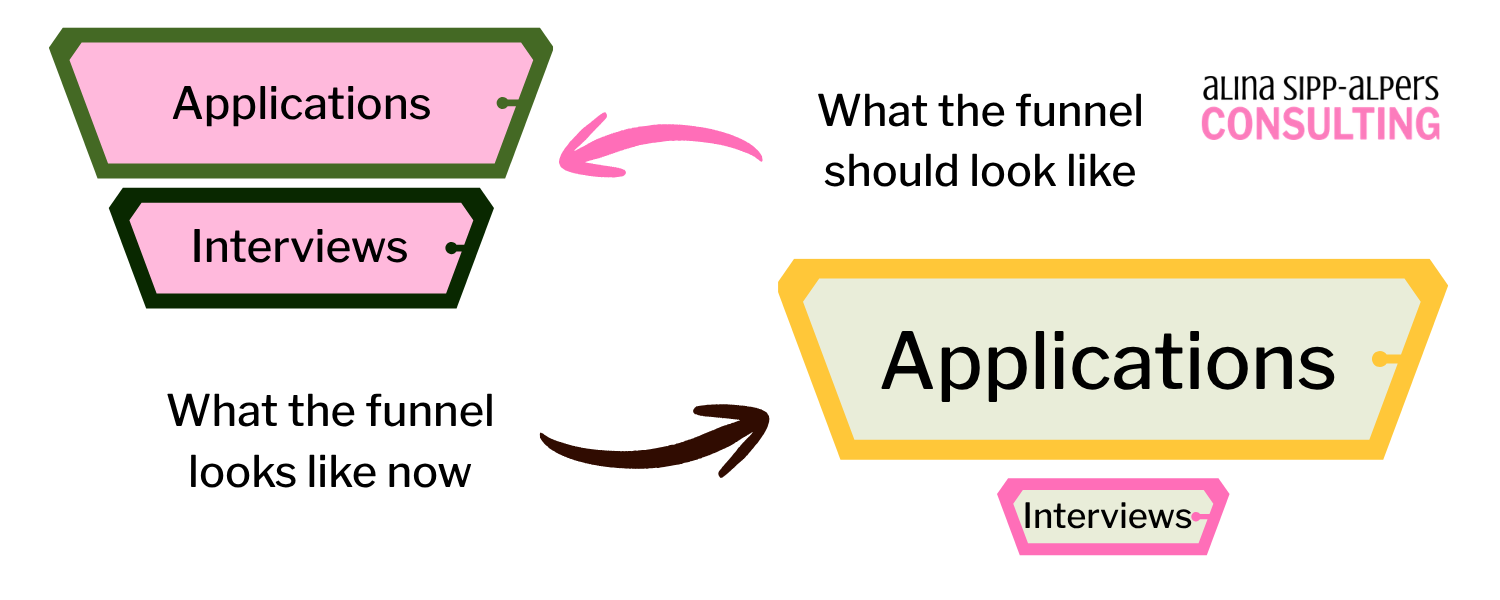
To that end, they blast their job out to their own networks, every movement listserv, and job boards. They find 200+ people to apply for that position, and the backend of their HR hiring platform now says that they have 200+ applicants. But these folks aren’t candidates. This pool is large, but there are only a few qualified applicants, folks you’d want to interview. The hiring team spends hours going through resumes only to find few who are viable and could be good at the job.
Think of it this way: When I was in high school, I and a few of my classmates used to get letters from Ivy League schools inviting us to apply. Those schools didn’t know anything about us; they didn’t have access to our academic record or the extracurriculars we did or the volunteer work we participated in. Their goal in sending these invitations was not to actually find their incoming freshman class; they certainly were not flagging our applications when they came in. It was to get the largest possible group of applications to consider, even if that meant that high schoolers were spending hours on applications for a school that was never going to consider them in the first place. Then those Ivy League schools bragged about how selective they were, because they admitted so few applicants.
You hear seemingly opposing things from hiring employers and job seekers: job seekers talk about applying to 100+ jobs in a year and never hearing back, and hiring employers talk about how they can’t find the right applicants to hire. And both of those things are true. Job seekers apply to hundreds of jobs, and as a result, employers receive hundreds of applications. But all that does is waste everyone’s time, and it rarely results in a quality hire or enjoyable hiring process.
As a recruiter, I never promise a huge applicant pool. My goal isn't the quantity of applicants or folks in the first round of interviews, it’s the quality of the person the employer ultimately hires.
We need to start reframing our idea of what a successful hiring process looks like, and bust this myth of the giant applicant pool. A massive pool doesn’t translate to a quality one.
If you find yourself hoping for a huge pool, ask yourself these questions:
The way I see recruitment is the more deliberate way. We can’t only be sourcing folks from specialized movement job boards; people have to know about them in order to be looking at them. And that means we’re leaving folks who don’t have that inside knowledge out of the loop. That means the folks who have been organizing for years in their community, but didn’t know there was a word for it; it means folks in their first movement job who got it after an internship at the same organization in college and don’t know where to find movement jobs in general; it means folks transitioning careers into the movement with transferable but not immediately-obviously-so skills. It takes extra work to seek those folks out, to find people who have potential and talent, but not relationships with every movement recruiter or high level hiring manager out there.
There’s no reason to source hundreds of applicants for a highly specialized job. There simply are not 200 people who have the right list of 10 qualifications and live in the right area of the country and speak the right 2 languages and are actively looking for work. So let’s give up the practice of looking for the largest pool we can, and start engaging in the practice of strategically seeking out the folks who would bring the most value to your organization.
Next up on Movement Mythbusters is: The Myth of the Perfect Resume.
Be the first to know when new movement role opportunities becomes available and submit your resume to my bank here.